Purity Culture Is Not Just Evangelical: Catholic Sexual Shame and Recovery
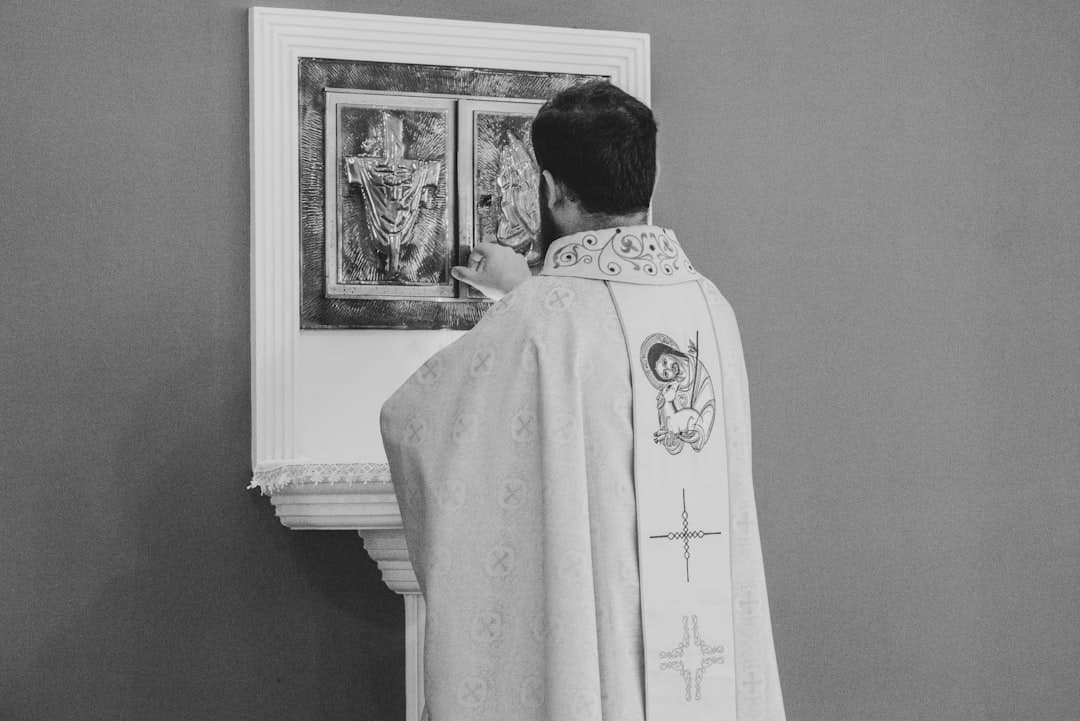
Photo by Mateus Campos Felipe
The leaving is done, or mostly done, and now you're left with what remains: the questions about who you are without Catholicism, the grief that arrives uninvited, the anger that catches you off guard in the cereal aisle. Recovery doesn't look like what you expected. It doesn't look like anything you were prepared for.
That's not because you're doing it wrong. It's because nobody taught you how to do this.
Who Are You Becoming?
What you're experiencing is real, and it's more common than anyone around you is likely to acknowledge. Catholic purity culture operates through theology of the body and the elevation of virginity as a spiritual ideal, but it produces the same core wound: the belief that your sexuality is something to fear. Naming this is not the end of the process, but it is the beginning.
The guilt infrastructure you may be experiencing isn't a personal failure. It's the predictable consequence of a system that tied your sense of ritual structure directly to your participation in Catholicism. When that participation changes, the loss is real and proportionate to what was at stake.
The nighttime hours are often the worst. During the day, distraction helps. But at 2 AM, when the confessional voice cataloguing your sins shows up, there's nowhere to hide. If this is happening to you, know that it's incredibly common, it's not a sign that your doubt is wrong, and it does get less frequent over time.
The anger you feel is not a distraction from recovery. It is part of recovery. Your tradition probably taught you that anger is dangerous or sinful, which means you may feel guilty about feeling it. But anger at genuine harm is healthy. It means your sense of justice is intact. The work is not to eliminate the anger but to channel it so it fuels your rebuilding rather than consuming you. You don't have to justify this process to anyone, not even yourself.
What Did Purity Culture Actually Do?
Purity culture didn't just give you rules about sex, it gave you a framework for understanding your own body as dangerous, your desires as threats, and your worth as contingent on your sexual history. Undoing that takes more than deciding the rules were wrong. It requires rebuilding your relationship with your own body, which is patient, physical work.
The being told to come back for the sacraments is one of the most painful dimensions of this transition. Your family isn't trying to hurt you. They're operating from the same framework you were given, one that tells them your soul is at stake. Their fear is real, even when their response is harmful.
If you felt something shift in your chest just now, a catch, a heaviness, that's not weakness. That's recognition. The emotional experience of this transition is not something you can think your way through. It lives in your body as much as your mind, in the tightness when you encounter reminders of your parish, in the wave of grief that arrives during CCD class, in the anger that surfaces at 2 AM. These responses are not signs of failure. They are your nervous system processing a genuine upheaval.
Some days you will feel fine. Some days you will feel like you're back at the beginning. This is normal, and it doesn't mean you've lost progress. Healing is not a staircase, it's more like a spiral. You revisit the same themes, but each time you encounter them from a slightly different altitude. The spiral is still moving upward, even when it circles back. You don't have to justify this process to anyone, not even yourself.
What Is Your Body Telling You?
What you're navigating right now is genuinely significant, and it deserves to be taken seriously, by you and by the people around you. This isn't a phase, a rebellion, or a crisis to be managed. It's a fundamental shift in how you understand yourself and the world, and that kind of shift takes time, support, and patience.
What makes this particular to Catholicism is the totality of what's involved. This isn't just a change in Sunday morning plans. The parish organized your social life, your moral framework, your sense of where you stand in the universe, and often your closest relationships. When you question one piece, the rest trembles.
There's a particular loneliness that comes with this kind of grief. The people who would normally comfort you are often the people you're grieving. The parish that would normally hold you is the community you're stepping away from. That double bind, needing support while losing your support system, is one of the cruelest features of religious transition.
Recovery is not a linear process with a finish line. It's more like weather, some days are clear and you can see for miles, and others the fog rolls in and you can barely see your feet. Both kinds of days are part of the process. The pressure to be "over it" by some deadline is itself a remnant of the all-or-nothing thinking many traditions instill. It's okay to rest in the middle of this. Not everything requires forward motion.
Why the Anger Makes Sense
You're angry because you were harmed, and anger is the healthy response to genuine harm. The years you gave, the decisions you made based on incomplete or manipulated information, the parts of yourself you suppressed, these are legitimate grounds for fury. Your anger is not a phase to rush through. It is information about what happened to you.
In Catholicism, doubt is rarely treated as a healthy part of growth. It's framed as a danger, a test, or a failure. That framing makes it nearly impossible to question openly, which forces the questioning underground, where it festers in isolation, disconnected from the support you'd need to navigate it well.
The grief may surprise you with its specificity. It's not just the big things, the theology, the community, the certainty. It's the small things. The parish festival you'll never experience the same way again. The inside jokes. The shared rhythms that organized your week. These micro-losses accumulate into something enormous, and they deserve to be mourned individually.
Some days you will feel fine. Some days you will feel like you're back at the beginning. This is normal, and it doesn't mean you've lost progress. Healing is not a staircase, it's more like a spiral. You revisit the same themes, but each time you encounter them from a slightly different altitude. The spiral is still moving upward, even when it circles back. There is no wrong way to navigate this.
This Grief Doesn't Follow a Schedule
What you're navigating right now is genuinely significant, and it deserves to be taken seriously, by you and by the people around you. This isn't a phase, a rebellion, or a crisis to be managed. It's a fundamental shift in how you understand yourself and the world, and that kind of shift takes time, support, and patience.
What outsiders rarely understand about leaving Catholicism is the scope of what changes. It's not just beliefs. It's vocabulary, social calendar, moral intuitions, daily habits, relationship dynamics, and often your sense of safety. The word "leaving" doesn't capture the enormity of what's actually happening.
If your stomach just dropped reading that, pay attention. Your body remembers what your mind is still processing. The part of you that learned to be small, to not make waves, to perform certainty for other people's comfort, that part had a job once, and it did it well. It kept you safe inside a system that required compliance. But you're in a different place now, and that protective part doesn't always know it yet. Be gentle with it. It's working from old information.
Some days you will feel fine. Some days you will feel like you're back at the beginning. This is normal, and it doesn't mean you've lost progress. Healing is not a staircase, it's more like a spiral. You revisit the same themes, but each time you encounter them from a slightly different altitude. The spiral is still moving upward, even when it circles back. You don't owe anyone an explanation for where you are.
You Don't Have to Navigate This Alone
If the weight of everything you're carrying right now feels like too much for one person, that feeling is telling you something worth listening to. You were never meant to navigate this alone, even though the nature of this transition often strips away the very support systems you'd normally rely on.
A therapist who understands religious transition can provide support that friends and family, however well-meaning, often cannot. You don't have to be in crisis to reach out. You don't have to have your story figured out.
There is no right timeline for any of this. There is no correct sequence of steps, no checklist to complete, no milestone that marks "done." You are allowed to take this at whatever pace makes sense for your life, and whatever you're feeling right now, the grief, the anger, the relief, the confusion, all of it tangled together, is the appropriate response to something genuinely significant.
Share this article
Your Next Steps
Try This
- Write down one message about your body or sexuality that you received from Catholic teaching, not to analyze it yet, just to name it and let it exist on the page outside of you.
- Notice one moment this week when you feel shame about your body or desires, and instead of pushing it away, simply say to yourself: 'This is a feeling I was taught, not a fact about who I am.'
- Look up one therapist or counselor who lists religious trauma or sexual shame as an area of practice, you don't have to book anything yet, just see who exists.
Keep Reading
A Moment to Reflect
It's okay if your relationship with your body feels complicated right now, you were taught a very specific story about what your body means, and unlearning that story takes time you're allowed to take.
You might notice that shame doesn't always arrive with a clear label. What does it feel like in your body, and when does it tend to show up?
What would it feel like to treat your own desires with the same gentleness you'd offer a close friend who was healing from something similar?
Further Reading
Practitioner and survivor community focused on healing religious trauma, including shame rooted in purity culture across Catholic and other traditions.
Reclamation Collective: Healing After High-Control Religion, Reclamation CollectiveLived-experience led space supporting people rebuilding identity and embodied selfhood after leaving shame-centered religious environments.
Stay connected
A monthly letter with new articles, book recommendations, and quiet resources. Just an email address — unsubscribe anytime.