Catholic Guilt Is Not Just a Punchline: Why It Persists and How to Actually Heal
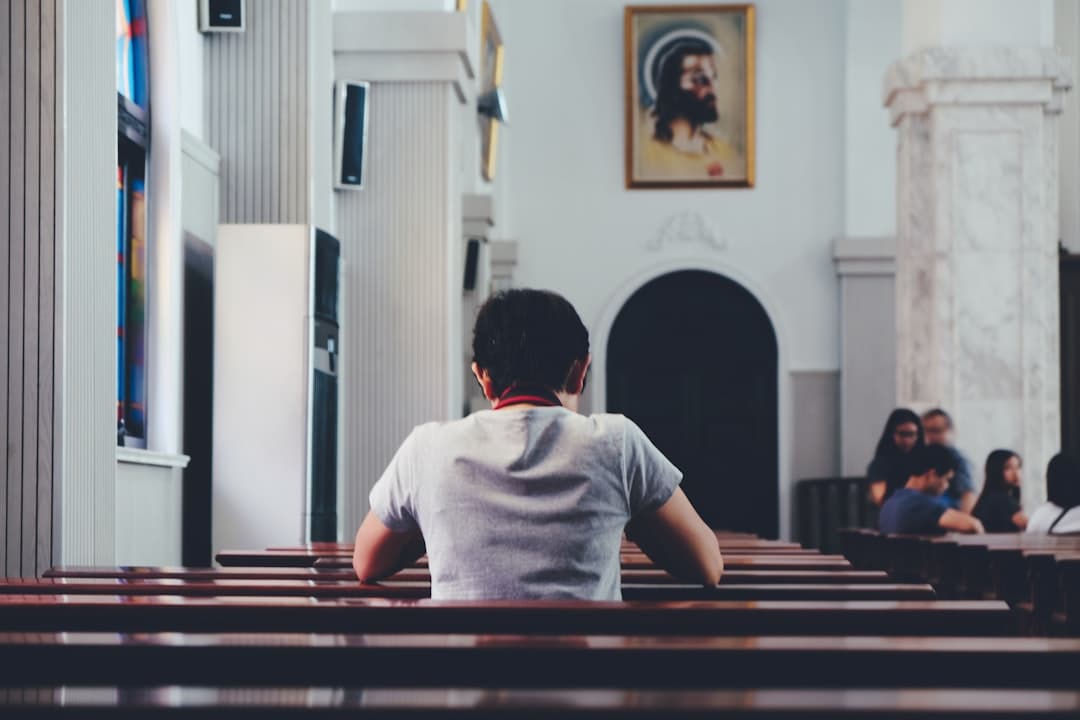
Photo by Rimon Mori
The leaving is done, or mostly done, and now you're left with what remains: the questions about who you are without Catholicism, the grief that arrives uninvited, the anger that catches you off guard in the cereal aisle. Recovery doesn't look like what you expected. It doesn't look like anything you were prepared for.
That's not because you're doing it wrong. It's because nobody taught you how to do this.
What Are You Actually Feeling?
What you're experiencing is real, and it's more common than anyone around you is likely to acknowledge. Catholic guilt persists not because you secretly still believe, but because guilt was the operating system of your moral formation, and replacing an operating system requires patient work. Naming this is not the end of the process, but it is the beginning.
Inside Catholicism, the entire social architecture is built on shared belief. holy water font isn't just a tradition, it's a trust signal, a belonging marker, a way of saying "I'm one of us." When your relationship to that shifts, the architecture doesn't just feel different. It becomes structurally different, because it was designed to function on consensus.
You might feel that in your body before you can name it with words. That's okay. The body often knows first. The part of you that learned to be small, to not make waves, to perform certainty for other people's comfort, that part had a job once, and it did it well. It kept you safe inside a system that required compliance. But you're in a different place now, and that protective part doesn't always know it yet. Be gentle with it. It's working from old information.
Recovery is not a linear process with a finish line. It's more like weather, some days are clear and you can see for miles, and others the fog rolls in and you can barely see your feet. Both kinds of days are part of the process. The pressure to be "over it" by some deadline is itself a remnant of the all-or-nothing thinking many traditions instill. There is no wrong way to navigate this.
Where Does the Guilt Come From?
The guilt you feel is not a moral signal, it's a conditioned response. the confessional voice cataloguing your sins was installed early, reinforced constantly, and designed to activate exactly when you start thinking independently. Understanding its origin doesn't make it disappear overnight, but it does help you stop obeying it automatically.
In Catholicism, doubt is rarely treated as a healthy part of growth. It's framed as a danger, a test, or a failure. That framing makes it nearly impossible to question openly, which forces the questioning underground, where it festers in isolation, disconnected from the support you'd need to navigate it well.
There's a particular loneliness that comes with this kind of grief. The people who would normally comfort you are often the people you're grieving. The parish that would normally hold you is the community you're stepping away from. That double bind, needing support while losing your support system, is one of the cruelest features of religious transition.
Some days you will feel fine. Some days you will feel like you're back at the beginning. This is normal, and it doesn't mean you've lost progress. Healing is not a staircase, it's more like a spiral. You revisit the same themes, but each time you encounter them from a slightly different altitude. The spiral is still moving upward, even when it circles back. It's okay if this takes longer than you thought it would.
Why the Anger Makes Sense
You're angry because you were harmed, and anger is the healthy response to genuine harm. The years you gave, the decisions you made based on incomplete or manipulated information, the parts of yourself you suppressed, these are legitimate grounds for fury. Your anger is not a phase to rush through. It is information about what happened to you.
The institutional betrayal you may be experiencing isn't a personal failure. It's the predictable consequence of a system that tied your sense of ritual structure directly to your participation in Catholicism. When that participation changes, the loss is real and proportionate to what was at stake.
Anger is often the emotion people feel most guilty about, because most religious traditions teach that anger is sinful or dangerous. But anger at genuine harm is not only appropriate, it's a sign that your sense of self-worth is intact. You're angry because you were treated in ways that weren't okay. That clarity is a foundation you can build on.
The anger you feel is not a distraction from recovery. It is part of recovery. Your tradition probably taught you that anger is dangerous or sinful, which means you may feel guilty about feeling it. But anger at genuine harm is healthy. It means your sense of justice is intact. The work is not to eliminate the anger but to channel it so it fuels your rebuilding rather than consuming you. You're not behind schedule. There is no schedule.
This Grief Doesn't Follow a Schedule
What you're navigating right now is genuinely significant, and it deserves to be taken seriously, by you and by the people around you. This isn't a phase, a rebellion, or a crisis to be managed. It's a fundamental shift in how you understand yourself and the world, and that kind of shift takes time, support, and patience.
Many people who've navigated this transition from Catholicism describe the same paradox: the first communion that once felt like home now feels like a performance, but the absence of it feels like nothing at all. That gap between performance and absence is where much of the disorientation lives.
The nighttime hours are often the worst. During the day, distraction helps. But at 2 AM, when the confessional voice cataloguing your sins shows up, there's nowhere to hide. If this is happening to you, know that it's incredibly common, it's not a sign that your doubt is wrong, and it does get less frequent over time.
Some days you will feel fine. Some days you will feel like you're back at the beginning. This is normal, and it doesn't mean you've lost progress. Healing is not a staircase, it's more like a spiral. You revisit the same themes, but each time you encounter them from a slightly different altitude. The spiral is still moving upward, even when it circles back. It's okay to feel two contradictory things at the same time.
What Your Body Is Carrying
What you're navigating right now is genuinely significant, and it deserves to be taken seriously, by you and by the people around you. This isn't a phase, a rebellion, or a crisis to be managed. It's a fundamental shift in how you understand yourself and the world, and that kind of shift takes time, support, and patience.
The Catholic guilt you may be experiencing isn't a personal failure. It's the predictable consequence of a system that tied your sense of parish community directly to your participation in Catholicism. When that participation changes, the loss is real and proportionate to what was at stake.
If you're reading this and your shoulders just tightened, notice that. It makes sense. The emotional experience of this transition is not something you can think your way through. It lives in your body as much as your mind, in the tightness when you encounter reminders of your parish, in the wave of grief that arrives during first communion, in the anger that surfaces at 2 AM. These responses are not signs of failure. They are your nervous system processing a genuine upheaval.
Some days you will feel fine. Some days you will feel like you're back at the beginning. This is normal, and it doesn't mean you've lost progress. Healing is not a staircase, it's more like a spiral. You revisit the same themes, but each time you encounter them from a slightly different altitude. The spiral is still moving upward, even when it circles back. It's okay to rest in the middle of this. Not everything requires forward motion.
You Don't Have to Navigate This Alone
If the weight of everything you're carrying right now feels like too much for one person, that feeling is telling you something worth listening to. You were never meant to navigate this alone, even though the nature of this transition often strips away the very support systems you'd normally rely on.
A therapist who understands religious transition can provide support that friends and family, however well-meaning, often cannot. You don't have to be in crisis to reach out. You don't have to have your story figured out.
There is no right timeline for any of this. There is no correct sequence of steps, no checklist to complete, no milestone that marks "done." You are allowed to take this at whatever pace makes sense for your life, and whatever you're feeling right now, the grief, the anger, the relief, the confusion, all of it tangled together, is the appropriate response to something genuinely significant.
Share this article
Your Next Steps
Try This
- Notice the next time Catholic guilt shows up uninvited, in your body, your thoughts, or a reflex reaction, and just name it out loud or in writing: 'That's the guilt. It's not instructions.'
- Identify one area of your life where guilt is still making decisions for you, and write a single sentence about what you would choose if guilt weren't in the room.
- Find one ex-Catholic community online or locally this week, not to join permanently, just to read other people's stories and confirm you're not alone in what you're carrying.
Keep Reading
A Moment to Reflect
It's okay if the guilt still feels like a moral signal rather than a conditioned reflex, noticing the difference takes time, and you don't have to have it figured out yet.
You might notice that some guilt feels strangely familiar, even comforting. What would it mean for your sense of self if that guilt weren't part of how you move through the world?
What would it feel like to do something ordinary, rest, enjoy food, say no to someone, without scanning yourself afterward for what you did wrong?
Stay connected
A monthly letter with new articles, book recommendations, and quiet resources. Just an email address — unsubscribe anytime.