Before You Leave the Mandir: A Practical Guide for Questioning Hindus
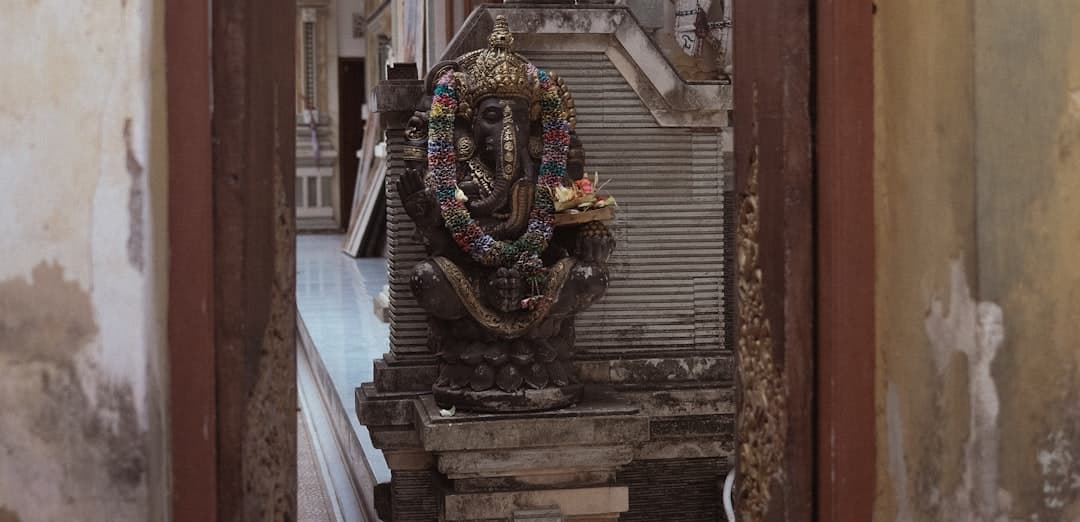
Photo by Niklas Neumann
Something has shifted. Maybe it happened during daily puja, when a practice you've done a thousand times suddenly felt hollow. Maybe it crept in slowly, one unanswered question at a time, until the accumulated weight became impossible to ignore. Either way, you're carrying something now that you didn't choose to pick up.
That weight is real. And you're not the first person to carry it.
What Does This Mean for You?
What you're experiencing is real, and it's more common than anyone around you is likely to acknowledge. There is no formal excommunication in most Hindu traditions, but the social and family consequences of leaving require careful, honest planning. Naming this is not the end of the process, but it is the beginning.
The caste identity entanglement you may be experiencing isn't a personal failure. It's the predictable consequence of a system that tied your sense of cultural identity directly to your participation in Hinduism. When that participation changes, the loss is real and proportionate to what was at stake.
One of the most practical things you can do right now is separate what's urgent from what's important. The pressure to have everything figured out immediately, your beliefs, your relationships, your identity, your future, is overwhelming and unnecessary. Most people navigate this one decision at a time, and that approach isn't just acceptable. It's wise.
You may be testing each question against the fear of what happens if the answer is what you suspect. That fear, of hell, of family rejection, of identity collapse, is not irrational. It's the predictable result of a system that taught you that questioning leads to catastrophe. But millions of people have followed these questions and survived. Many of them would tell you the other side of questioning is not catastrophe. It's clarity. You don't have to be sure about anything to deserve support.
You're Not the First Person to Think This
Millions of people have sat exactly where you're sitting. They've stared at the same ceiling at 2 AM, carried the same questions to the same puja, and felt the same terrifying loneliness of doubting something everyone around them treats as settled. You are not an anomaly. You are not broken. You are part of a pattern as old as organized religion itself.
What outsiders rarely understand about leaving Hinduism is the scope of what changes. It's not just beliefs. It's vocabulary, social calendar, moral intuitions, daily habits, relationship dynamics, and often your sense of safety. The word "leaving" doesn't capture the enormity of what's actually happening.
The internet has created resources for people leaving Hinduism that didn't exist a generation ago. Online communities, specialized forums, podcasts, YouTube channels, memoirs, self-help guides, the ecosystem of support is vast. But be discerning: not all post-faith communities are healthy, and some replicate the same controlling dynamics they claim to oppose. Look for spaces that tolerate disagreement.
There's a stage in questioning where you know you can't go back but you can't see what's ahead. It's like standing in a dark hallway between two rooms. The room behind you is lit and familiar, but the door has locked. The room ahead of you is dark. This hallway stage is uncomfortable, and it's temporary. You're not stuck. You're in transit. You don't have to justify this process to anyone, not even yourself.
What Happens if You Say It Out Loud?
There's power in speaking a doubt out loud, and there's also risk. Inside Hinduism, voicing doubt can trigger the community's immune response, well-meaning interventions, increased scrutiny, strained relationships. Before you say anything to anyone, ask: is this person safe? Do they have a track record of sitting with hard things without trying to fix them?
Many people who've navigated this transition from Hinduism describe the same paradox: the pilgrimage that once felt like home now feels like a performance, but the absence of it feels like nothing at all. That gap between performance and absence is where much of the disorientation lives.
Information is a form of power in this process, and much of the information you need isn't available from inside Hinduism. Seek out people who have navigated similar transitions. The experience of leaving Hinduism has been documented extensively by others, and their insights can save you from unnecessary pain and costly mistakes.
The questioning itself is not the problem, even though your tradition probably framed it that way. Doubt was treated as a spiritual failure, a test to overcome, a weakness to confess. But doubt is also how people grow. The fact that you're asking questions doesn't mean something is wrong with you. It might mean something is finally working. It's okay to rest in the middle of this. Not everything requires forward motion.
How Long Can You Carry This Alone?
The isolation of carrying religious doubt in secret is genuinely damaging. The cognitive load of maintaining a public faith while privately questioning it drains energy you need for everything else in your life. You deserve at least one person, a therapist, a friend outside the community, an online peer, who knows the truth of what you're carrying.
What makes this particular to Hinduism is the totality of what's involved. This isn't just a change in Sunday morning plans. The sangha organized your social life, your moral framework, your sense of where you stand in the universe, and often your closest relationships. When you question one piece, the rest trembles.
Document everything you might need, financial records, important contacts, educational certificates, legal documents. If your transition involves any risk of conflict over money, custody, or housing, having your own copies of key documents is not paranoia. It's practical wisdom.
The questioning itself is not the problem, even though your tradition probably framed it that way. Doubt was treated as a spiritual failure, a test to overcome, a weakness to confess. But doubt is also how people grow. The fact that you're asking questions doesn't mean something is wrong with you. It might mean something is finally working. You don't owe anyone an explanation for where you are.
What Would Permission Actually Feel Like?
Permission is what your tradition probably never gave you, and it's what you most need right now. Permission to doubt, to question, to not know, to take your time, to change your mind, to stay, to leave, to come back. You have always had this permission, even when every authority in your life told you otherwise.
In Hinduism, doubt is rarely treated as a healthy part of growth. It's framed as a danger, a test, or a failure. That framing makes it nearly impossible to question openly, which forces the questioning underground, where it festers in isolation, disconnected from the support you'd need to navigate it well.
The systems your faith community provided, social support, moral guidance, community events, life milestones, were comprehensive. Replacing them requires building multiple new systems, not finding a single replacement. Think of it less like switching churches and more like designing a new operating system for your social and moral life, one feature at a time.
The questioning itself is not the problem, even though your tradition probably framed it that way. Doubt was treated as a spiritual failure, a test to overcome, a weakness to confess. But doubt is also how people grow. The fact that you're asking questions doesn't mean something is wrong with you. It might mean something is finally working. You're allowed to grieve something other people don't understand as a loss.
You Don't Have to Navigate This Alone
If the weight of everything you're carrying right now feels like too much for one person, that feeling is telling you something worth listening to. You were never meant to navigate this alone, even though the nature of this transition often strips away the very support systems you'd normally rely on.
A therapist who understands religious transition can provide support that friends and family, however well-meaning, often cannot. You don't have to be in crisis to reach out. You don't have to have your story figured out.
There is no right timeline for any of this. There is no correct sequence of steps, no checklist to complete, no milestone that marks "done." You are allowed to take this at whatever pace makes sense for your life, and whatever you're feeling right now, the grief, the anger, the relief, the confusion, all of it tangled together, is the appropriate response to something genuinely significant.
Share this article
Your Next Steps
Try This
- Write down one question about your faith that you've been carrying alone, not to answer it, just to let it exist on paper outside of you.
- Identify one person in your life, inside or outside your community, who you think could hold your doubts without trying to fix them.
- The next time you're in a religious practice that feels hollow, give yourself permission to simply observe rather than perform, no decision required.
Keep Reading
A Moment to Reflect
It's okay if you don't know yet whether you're leaving, staying, or somewhere in between, you're allowed to simply sit with the questions without needing them to resolve.
You might notice that some doubts feel intellectual and others feel like grief. What would it feel like to treat both as valid, without ranking one as more serious than the other?
It's okay to love the culture, the festivals, the family rituals, and still feel uncertain about the theology. Those two things are allowed to coexist in you right now.
Further Reading
Community and resource hub specifically for South Asian freethinkers questioning Hindu and other Indian religious traditions, offering culturally relevant perspectives.
Finding a Therapist Who Understands Religious Transition, Psychology TodayTherapist directory with filters for religious and spiritual issues, helping questioning individuals find culturally competent mental health support during deconstruction.
Stay connected
A monthly letter with new articles, book recommendations, and quiet resources. Just an email address — unsubscribe anytime.