The Rage Stage: Why You Are Furious at the Church and Why That Fury Is Legitimate
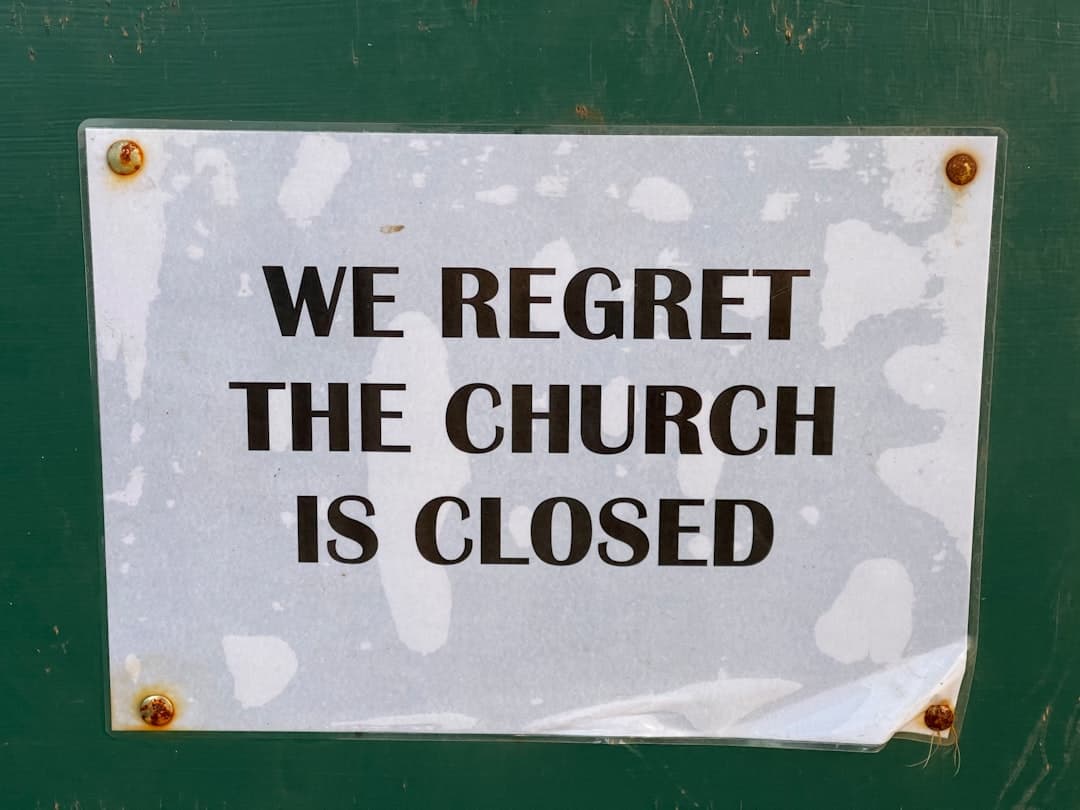
Photo by Jonny Gios
The questions come at the worst times. During Sunday service, when everyone around you seems certain and you feel like an imposter. In the middle of the night, when the voice that says doubt is sin won't let you sleep. At a family gathering, when someone says something you can no longer agree with and you have to decide, again, whether to speak or stay silent.
You're not losing your mind. You're starting to use it.
What Are You Actually Feeling?
What you're experiencing is real, and it's more common than anyone around you is likely to acknowledge. Anger is not a sin, a phase to rush through, or a sign you are bitter. It is an appropriate response to discovering you were harmed by a system that told you it was saving you. Naming this is not the end of the process, but it is the beginning.
What makes this particular to evangelical Christianity is the totality of what's involved. This isn't just a change in Sunday morning plans. The congregation organized your social life, your moral framework, your sense of where you stand in the universe, and often your closest relationships. When you question one piece, the rest trembles.
Notice what your shoulders are doing right now. Are they up around your ears? That's your nervous system telling you this hits close. The part of you that learned to be small, to not make waves, to perform certainty for other people's comfort, that part had a job once, and it did it well. It kept you safe inside a system that required compliance. But you're in a different place now, and that protective part doesn't always know it yet. Be gentle with it. It's working from old information.
You may be testing each question against the fear of what happens if the answer is what you suspect. That fear, of hell, of family rejection, of identity collapse, is not irrational. It's the predictable result of a system that taught you that questioning leads to catastrophe. But millions of people have followed these questions and survived. Many of them would tell you the other side of questioning is not catastrophe. It's clarity. It's okay to rest in the middle of this. Not everything requires forward motion.
Why Are You So Angry?
You're angry because you were harmed, and anger is the healthy response to genuine harm. The years you gave, the decisions you made based on incomplete or manipulated information, the parts of yourself you suppressed, these are legitimate grounds for fury. Your anger is not a phase to rush through. It is information about what happened to you.
Many people who've navigated this transition from evangelical Christianity describe the same paradox: the prayer chain that once felt like home now feels like a performance, but the absence of it feels like nothing at all. That gap between performance and absence is where much of the disorientation lives.
Grief without recognition is one of the hardest kinds of grief to carry. There is no sympathy card for losing your faith, no casserole brigade for leaving your church. The people around you may not even recognize what you've lost as a real loss. That absence of validation makes the grief louder, not quieter.
The questioning itself is not the problem, even though your tradition probably framed it that way. Doubt was treated as a spiritual failure, a test to overcome, a weakness to confess. But doubt is also how people grow. The fact that you're asking questions doesn't mean something is wrong with you. It might mean something is finally working. It's okay to need help with this. You were never meant to carry it alone.
You're Not the First Person to Think This
Millions of people have sat exactly where you're sitting. They've stared at the same ceiling at 2 AM, carried the same questions to the same Sunday service, and felt the same terrifying loneliness of doubting something everyone around them treats as settled. You are not an anomaly. You are not broken. You are part of a pattern as old as organized religion itself.
The hell anxiety you may be experiencing isn't a personal failure. It's the predictable consequence of a system that tied your sense of social identity directly to your participation in evangelical Christianity. When that participation changes, the loss is real and proportionate to what was at stake.
There's a particular loneliness that comes with this kind of grief. The people who would normally comfort you are often the people you're grieving. The congregation that would normally hold you is the community you're stepping away from. That double bind, needing support while losing your support system, is one of the cruelest features of religious transition.
There's a stage in questioning where you know you can't go back but you can't see what's ahead. It's like standing in a dark hallway between two rooms. The room behind you is lit and familiar, but the door has locked. The room ahead of you is dark. This hallway stage is uncomfortable, and it's temporary. You're not stuck. You're in transit. You don't have to justify this process to anyone, not even yourself.
What Happens if You Say It Out Loud?
There's power in speaking a doubt out loud, and there's also risk. Inside evangelical Christianity, voicing doubt can trigger the community's immune response, well-meaning interventions, increased scrutiny, strained relationships. Before you say anything to anyone, ask: is this person safe? Do they have a track record of sitting with hard things without trying to fix them?
Many people who've navigated this transition from evangelical Christianity describe the same paradox: the potluck that once felt like home now feels like a performance, but the absence of it feels like nothing at all. That gap between performance and absence is where much of the disorientation lives.
If your stomach just dropped reading that, pay attention. Your body remembers what your mind is still processing. The part of you that learned to be small, to not make waves, to perform certainty for other people's comfort, that part had a job once, and it did it well. It kept you safe inside a system that required compliance. But you're in a different place now, and that protective part doesn't always know it yet. Be gentle with it. It's working from old information.
There's a stage in questioning where you know you can't go back but you can't see what's ahead. It's like standing in a dark hallway between two rooms. The room behind you is lit and familiar, but the door has locked. The room ahead of you is dark. This hallway stage is uncomfortable, and it's temporary. You're not stuck. You're in transit. It's okay to feel two contradictory things at the same time.
How Long Can You Carry This Alone?
The isolation of carrying religious doubt in secret is genuinely damaging. The cognitive load of maintaining a public faith while privately questioning it drains energy you need for everything else in your life. You deserve at least one person, a therapist, a friend outside the community, an online peer, who knows the truth of what you're carrying.
The evangelical world taught you that born-again identity was who you are, not just what you believe. When that identity cracks, you're not just revising a theological position. You're losing a self-concept that organized everything from your daily routine to your deepest relationships.
Pay attention to whether your throat feels tight as you read this. That's your body holding words you haven't been able to say yet. The part of you that learned to be small, to not make waves, to perform certainty for other people's comfort, that part had a job once, and it did it well. It kept you safe inside a system that required compliance. But you're in a different place now, and that protective part doesn't always know it yet. Be gentle with it. It's working from old information.
You may be testing each question against the fear of what happens if the answer is what you suspect. That fear, of hell, of family rejection, of identity collapse, is not irrational. It's the predictable result of a system that taught you that questioning leads to catastrophe. But millions of people have followed these questions and survived. Many of them would tell you the other side of questioning is not catastrophe. It's clarity. You're not behind schedule. There is no schedule.
You Don't Have to Navigate This Alone
If the weight of everything you're carrying right now feels like too much for one person, that feeling is telling you something worth listening to. You were never meant to navigate this alone, even though the nature of this transition often strips away the very support systems you'd normally rely on.
A therapist who understands religious transition can provide support that friends and family, however well-meaning, often cannot. You don't have to be in crisis to reach out. You don't have to have your story figured out.
There is no right timeline for any of this. There is no correct sequence of steps, no checklist to complete, no milestone that marks "done." You are allowed to take this at whatever pace makes sense for your life, and whatever you're feeling right now, the grief, the anger, the relief, the confusion, all of it tangled together, is the appropriate response to something genuinely significant.
Share this article
Your Next Steps
Try This
- Write down one specific thing the church did or taught that you are angry about, not to share with anyone, just to name it for yourself.
- The next time someone dismisses your anger as bitterness or a phase, practice saying 'I'm still working through this' instead of defending or explaining yourself.
- Find one other person, a friend, an online community, or a therapist, who can hear your anger without trying to fix it or talk you out of it.
Keep Reading
Explore Resources
A Moment to Reflect
It's okay if your anger doesn't feel 'proportionate', you don't need to justify the size of what you're feeling to anyone, including yourself.
You might notice that your rage shows up most in specific moments or around specific people. What does that tell you about what mattered most to you?
What would it feel like to treat your anger as information rather than a problem, something pointing toward what you valued and what was taken from you?
Stay connected
A monthly letter with new articles, book recommendations, and quiet resources. Just an email address — unsubscribe anytime.