How to Tell Your Catholic Parents You Don't Believe Anymore
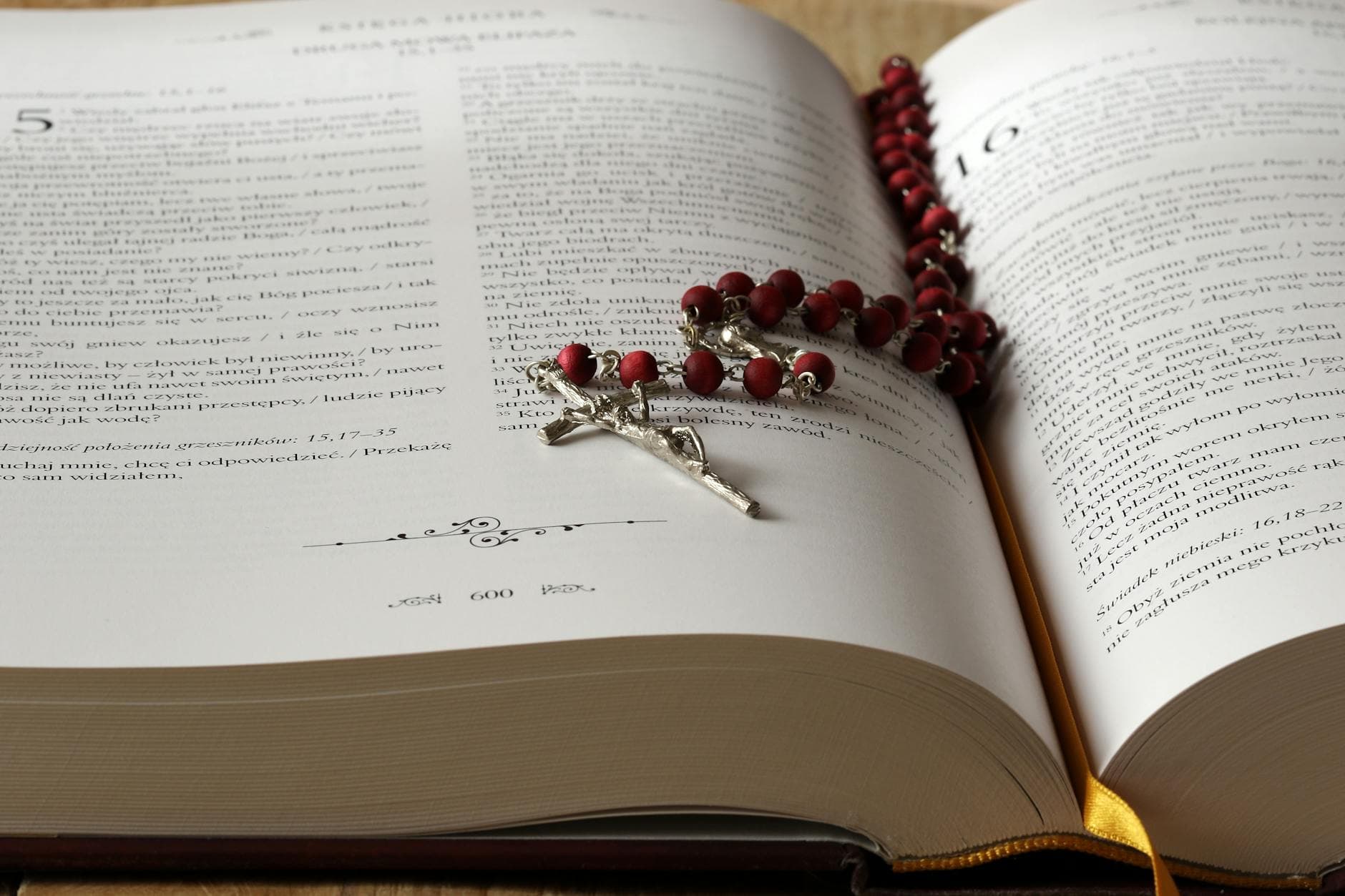
Photo by Pixabay
Leaving Catholicism is not a single moment. It's a thousand small departures, the last time you attend Mass without knowing it's the last time, the conversation that changes everything, the morning you wake up and realize the life you were living no longer fits.
The weight of what you're navigating deserves to be named plainly.
What Does This Mean for You?
What you're experiencing is real, and it's more common than anyone around you is likely to acknowledge. There is no script that guarantees a painless conversation, but there are approaches grounded in timing, emotional honesty, and boundary-setting that reduce harm. Naming this is not the end of the process, but it is the beginning.
Inside Catholicism, the entire social architecture is built on shared belief. first communion isn't just a tradition, it's a trust signal, a belonging marker, a way of saying "I'm one of us." When your relationship to that shifts, the architecture doesn't just feel different. It becomes structurally different, because it was designed to function on consensus.
The nighttime hours are often the worst. During the day, distraction helps. But at 2 AM, when the confessional voice cataloguing your sins shows up, there's nowhere to hide. If this is happening to you, know that it's incredibly common, it's not a sign that your doubt is wrong, and it does get less frequent over time.
There is no clean way to leave Catholicism. Most departures are messy, gradual, and ambiguous. Some people leave and come back. Some leave physically but stay emotionally for years. Some leave one community and join another. All of these are valid patterns, and none of them follow a script. It's okay to not have this figured out.
How Do You Talk to Your Parents?
What you're navigating right now is genuinely significant, and it deserves to be taken seriously, by you and by the people around you. This isn't a phase, a rebellion, or a crisis to be managed. It's a fundamental shift in how you understand yourself and the world, and that kind of shift takes time, support, and patience.
What makes this particular to Catholicism is the totality of what's involved. This isn't just a change in Sunday morning plans. The parish organized your social life, your moral framework, your sense of where you stand in the universe, and often your closest relationships. When you question one piece, the rest trembles.
If you felt something shift in your chest just now, a catch, a heaviness, that's not weakness. That's recognition. The emotional experience of this transition is not something you can think your way through. It lives in your body as much as your mind, in the tightness when you encounter reminders of your parish, in the wave of grief that arrives during parish festival, in the anger that surfaces at 2 AM. These responses are not signs of failure. They are your nervous system processing a genuine upheaval.
People who leave Catholicism often describe feeling like they're performing a kind of social death, visible to the community as an absence, discussed in terms that reduce their complex decision to a simple narrative of being "lost" or "fallen." That narrative erasure is its own kind of harm, and it's okay to feel angry about it.
What Nobody Tells You About the First Weeks
The first weeks are a strange combination of relief and terror. You may feel lighter than you have in years, followed immediately by a wave of grief so heavy it pins you to the bed. Both are real. Neither negates the other. Most people report that the emotional volatility of the early weeks gradually gives way to something more manageable, but "gradually" means weeks or months, not days.
What outsiders rarely understand about leaving Catholicism is the scope of what changes. It's not just beliefs. It's vocabulary, social calendar, moral intuitions, daily habits, relationship dynamics, and often your sense of safety. The word "leaving" doesn't capture the enormity of what's actually happening.
If your stomach just dropped reading that, pay attention. Your body remembers what your mind is still processing. The part of you that learned to be small, to not make waves, to perform certainty for other people's comfort, that part had a job once, and it did it well. It kept you safe inside a system that required compliance. But you're in a different place now, and that protective part doesn't always know it yet. Be gentle with it. It's working from old information.
The anticipatory grief of leaving, mourning losses that haven't fully happened yet, is one of the most disorienting features of this stage. You're grieving the conversations that will go badly, the relationships that will strain, the holidays that will feel different. This forward-looking grief is exhausting because you're mourning the present and the future simultaneously. You're allowed to change your mind. About any of it. At any time.
The Conversations You're Dreading
The conversation you're dreading probably won't go the way you've rehearsed it, for better and for worse. Most people find that having a script helps with the first thirty seconds and becomes useless after that. What helps more than a script is a clear sense of what you need the other person to understand, and the willingness to pause if the conversation goes off the rails.
The being told to come back for the sacraments is one of the most painful dimensions of this transition. Your family isn't trying to hurt you. They're operating from the same framework you were given, one that tells them your soul is at stake. Their fear is real, even when their response is harmful.
Pay attention to whether your throat feels tight as you read this. That's your body holding words you haven't been able to say yet. The emotional experience of this transition is not something you can think your way through. It lives in your body as much as your mind, in the tightness when you encounter reminders of your parish, in the wave of grief that arrives during holy water font, in the anger that surfaces at 2 AM. These responses are not signs of failure. They are your nervous system processing a genuine upheaval.
There is no clean way to leave Catholicism. Most departures are messy, gradual, and ambiguous. Some people leave and come back. Some leave physically but stay emotionally for years. Some leave one community and join another. All of these are valid patterns, and none of them follow a script. You don't have to be sure about anything to deserve support.
What You Can Expect to Feel
You can expect to feel everything at once, and then nothing at all, and then everything again. The emotional rhythm of this transition is not a smooth arc from pain to peace. It's more like weather, storms and calm in unpredictable patterns that gradually shift toward more calm than storm. But the storms can still catch you off guard months or years in.
Inside Catholicism, the entire social architecture is built on shared belief. sacramental preparation isn't just a tradition, it's a trust signal, a belonging marker, a way of saying "I'm one of us." When your relationship to that shifts, the architecture doesn't just feel different. It becomes structurally different, because it was designed to function on consensus.
The grief may surprise you with its specificity. It's not just the big things, the theology, the community, the certainty. It's the small things. The CCD class you'll never experience the same way again. The inside jokes. The shared rhythms that organized your week. These micro-losses accumulate into something enormous, and they deserve to be mourned individually.
The anticipatory grief of leaving, mourning losses that haven't fully happened yet, is one of the most disorienting features of this stage. You're grieving the conversations that will go badly, the relationships that will strain, the holidays that will feel different. This forward-looking grief is exhausting because you're mourning the present and the future simultaneously. It's okay to need help with this. You were never meant to carry it alone.
You Don't Have to Navigate This Alone
If the weight of everything you're carrying right now feels like too much for one person, that feeling is telling you something worth listening to. You were never meant to navigate this alone, even though the nature of this transition often strips away the very support systems you'd normally rely on.
A therapist who understands religious transition can provide support that friends and family, however well-meaning, often cannot. You don't have to be in crisis to reach out. You don't have to have your story figured out.
There is no right timeline for any of this. There is no correct sequence of steps, no checklist to complete, no milestone that marks "done." You are allowed to take this at whatever pace makes sense for your life, and whatever you're feeling right now, the grief, the anger, the relief, the confusion, all of it tangled together, is the appropriate response to something genuinely significant.
Share this article
Your Next Steps
Try This
- Write down three things you want your parents to understand about you, not just about your beliefs, before you have this conversation.
- Identify one person in your life who already knows where you stand, and let them know you might need support after talking to your parents.
- Choose a specific, low-stakes moment to have the conversation, not during a holiday, not after Mass, not mid-argument, and put it on your calendar.
Keep Reading
Explore Resources
A Moment to Reflect
It's okay if you don't have a clear explanation for what you believe right now, you're allowed to tell your parents that you're still figuring it out.
You might notice fear about how your parents will respond. What part of that fear is about them, and what part is about a version of yourself you were expected to stay?
What would it feel like to have this conversation be about preserving the relationship rather than winning an argument or getting approval?
Further Reading
Peer support communities specifically for people navigating family and social fallout from leaving religion, offering connection with others in similar situations.
Religious Trauma and Family Estrangement, The Religious Trauma CollectiveLived-experience and clinical voices addressing the emotional and relational wounds that can accompany leaving a tight-knit faith community like Catholicism.
Stay connected
A monthly letter with new articles, book recommendations, and quiet resources. Just an email address — unsubscribe anytime.