How to Support Your Partner Through Catholic Deconstruction Without Losing Your Own Faith
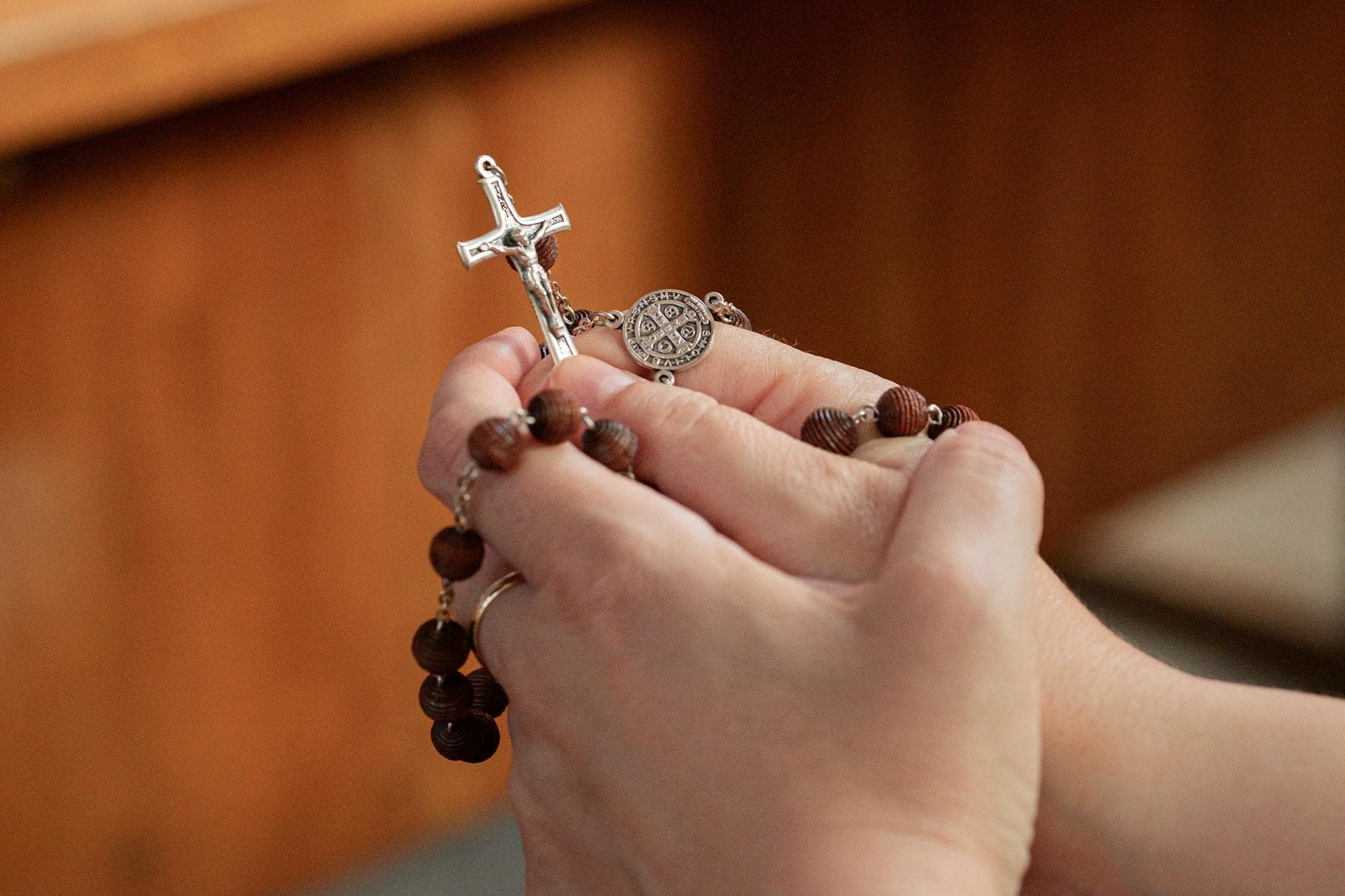
Photo by Dolina Modlitwy
You noticed the change before they said anything. The missed Mass, the quiet during prayer, the way they changed the subject when you mentioned something about parish. You know. And you're carrying your own grief about it, probably in silence.
Your feelings about this are as real as theirs.
Why This Is Happening
What your loved one is going through has a name and a pattern, even if it doesn't feel that way from the outside. Your partner's deconstruction is not an attack on you, your marriage, or your own faith, but it will change the relationship, and navigating that requires a playbook that does not currently exist. Understanding this is the first step toward supporting them without losing yourself in the process.
The abuse crisis you may be experiencing isn't a personal failure. It's the predictable consequence of a system that tied your sense of sacramental life directly to your participation in Catholicism. When that participation changes, the loss is real and proportionate to what was at stake.
Here's what actually helps, based on the experience of thousands of families: listen more than you talk. Your loved one has likely rehearsed this conversation in their head dozens of times, anticipating your objections. When you ask genuine questions instead of making counter-arguments, you disrupt their worst expectations in the best possible way.
The best supporters are the ones who can hold two things at once: "I wish this weren't happening" and "I love you as you are." Those two truths don't cancel each other out. They coexist, and the person you're supporting needs to see that you can hold both without choosing between them. It's okay if this takes longer than you thought it would.
What Happens to the Marriage?
The marriage can survive this, but it will require both of you to build something new rather than trying to restore what was. Mixed-faith marriages work when both partners prioritize the relationship over being right about theology. That's harder than it sounds, and it's possible.
What makes this particular to Catholicism is the totality of what's involved. This isn't just a change in Sunday morning plans. The parish organized your social life, your moral framework, your sense of where you stand in the universe, and often your closest relationships. When you question one piece, the rest trembles.
Your loved one is probably watching you more closely than you realize. They're looking for evidence that honesty is safe, that being real about where they are won't cost them the relationship. Every interaction is a data point. When you show up with curiosity instead of judgment, you're writing proof that love is bigger than agreement.
Consider seeking out other families who are navigating mixed-faith dynamics. The isolation of being a supporter in a faith community that treats your loved one's departure as a failure can be overwhelming. Finding others who understand, who have sat where you're sitting, provides a kind of relief that no amount of personal prayer or pastoral counseling can replicate. You're allowed to grieve something other people don't understand as a loss.
What Not to Say (and What to Say Instead)
The things that feel most natural to say are often the things that cause the most damage. "I'll pray for you," "Have you talked to priest?", "Are you sure this isn't just a phase?", "You'll regret this", each of these feels like love to the person saying it and feels like a closing door to the person hearing it. What helps more: "I love you, and that hasn't changed."
In Catholicism, doubt is rarely treated as a healthy part of growth. It's framed as a danger, a test, or a failure. That framing makes it nearly impossible to question openly, which forces the questioning underground, where it festers in isolation, disconnected from the support you'd need to navigate it well.
The urge to fix this is natural. You see someone you love in pain, and every instinct says to make it stop. But their pain is not a problem to be solved, it's a process to be respected. Your presence matters more than your solutions. Sit with them. Ask questions. Let silence exist without rushing to fill it.
Your own grief about this transition is valid and deserves its own space. You may be mourning the moral framework you thought you'd share forever. You may be afraid of what this means for your family's future. These fears are not irrational, they reflect real changes in your shared life. You're not behind schedule. There is no schedule.
Why Your Usual Response Isn't Working
The responses your tradition taught you, apologetics arguments, prayer offensives, involving priest, treating it as a spiritual emergency, don't work because they misdiagnose the situation. Your loved one is not lost. They are not confused. They are not under spiritual attack. They have looked at their beliefs honestly and arrived at different conclusions. Treating that like a crisis to be managed will drive them further away.
The being told to come back for the sacraments is one of the most painful dimensions of this transition. Your family isn't trying to hurt you. They're operating from the same framework you were given, one that tells them your soul is at stake. Their fear is real, even when their response is harmful.
Find your own support. You need someone to talk to about what you're going through, and that person should not be the one who is deconstructing. A therapist, a trusted friend, a support group for families navigating faith transitions, these resources exist and using them isn't weakness.
The hardest part of supporting someone through this may be accepting that you cannot control the outcome. You cannot love them back into belief. You cannot argue them back into the parish. What you can do is show them that your love is not conditional on their theology. That single message, delivered consistently, is more powerful than any apologetics argument. There is no right timeline for any of this.
What You Can Actually Do
The most powerful thing you can do is the simplest: show up without an agenda. Your loved one has been preparing for the worst, rejection, lectures, interventions. When you show up with nothing but genuine curiosity and unconditional presence, you disrupt every fearful expectation they had. That disruption is a gift.
What outsiders rarely understand about leaving Catholicism is the scope of what changes. It's not just beliefs. It's vocabulary, social calendar, moral intuitions, daily habits, relationship dynamics, and often your sense of safety. The word "leaving" doesn't capture the enormity of what's actually happening.
It may help to know what your loved one is not doing: they are not doing this to hurt you, they are not going through a phase, they are not being deceived by the internet or bad influences, and they are not attacking your faith by questioning their own. They arrived at a different conclusion through genuine reflection, and treating that as an attack will only drive them away.
Many supporters fall into a pattern of surveillance, monitoring their loved one's behavior for signs of return or further departure. This is exhausting for both of you and damages trust. If you catch yourself checking whether they prayed, whether they attended, whether they're "getting worse", pause. Ask yourself what you actually need right now. The answer is usually reassurance, and surveillance doesn't provide it. It's okay if this takes longer than you thought it would.
Taking Care of Yourself Through This
Supporting someone through a faith transition is exhausting work, especially when your own faith is part of your identity. You're allowed to need help too. A therapist who understands religious dynamics can help you process your own experience without it bleeding into your relationship with the person you're supporting.
Whatever happens with your loved one's faith, your relationship with them is not over unless someone decides it is. Many families find their way to a new normal, different from what they imagined, but genuinely good. That possibility is real, and it's worth the difficult work of staying connected.
Your love brought you here. That matters more than you know.
Share this article
Your Next Steps
Try This
- Write down one fear you have about your partner's deconstruction that you haven't said out loud yet, not to share, just to acknowledge it exists.
- The next time your partner brings up a doubt or question, try responding with one curious question instead of a reassurance or explanation.
- Identify one person in your life, a friend, spiritual director, or therapist, you can talk to about your own faith and grief this week, separate from your partner.
Keep Reading
Explore Resources
A Moment to Reflect
It's okay to grieve what your shared faith life used to look like, even while loving your partner through where they are now.
You might notice that some of your partner's questions stir something in you too, there's no pressure to have that figured out.
What would it feel like to hold your own faith and your partner's doubt in the same hand, without either one canceling the other out?
Stay connected
A monthly letter with new articles, book recommendations, and quiet resources. Just an email address — unsubscribe anytime.