Creating New Rituals: Meaningful Practices Without Hindu Theology
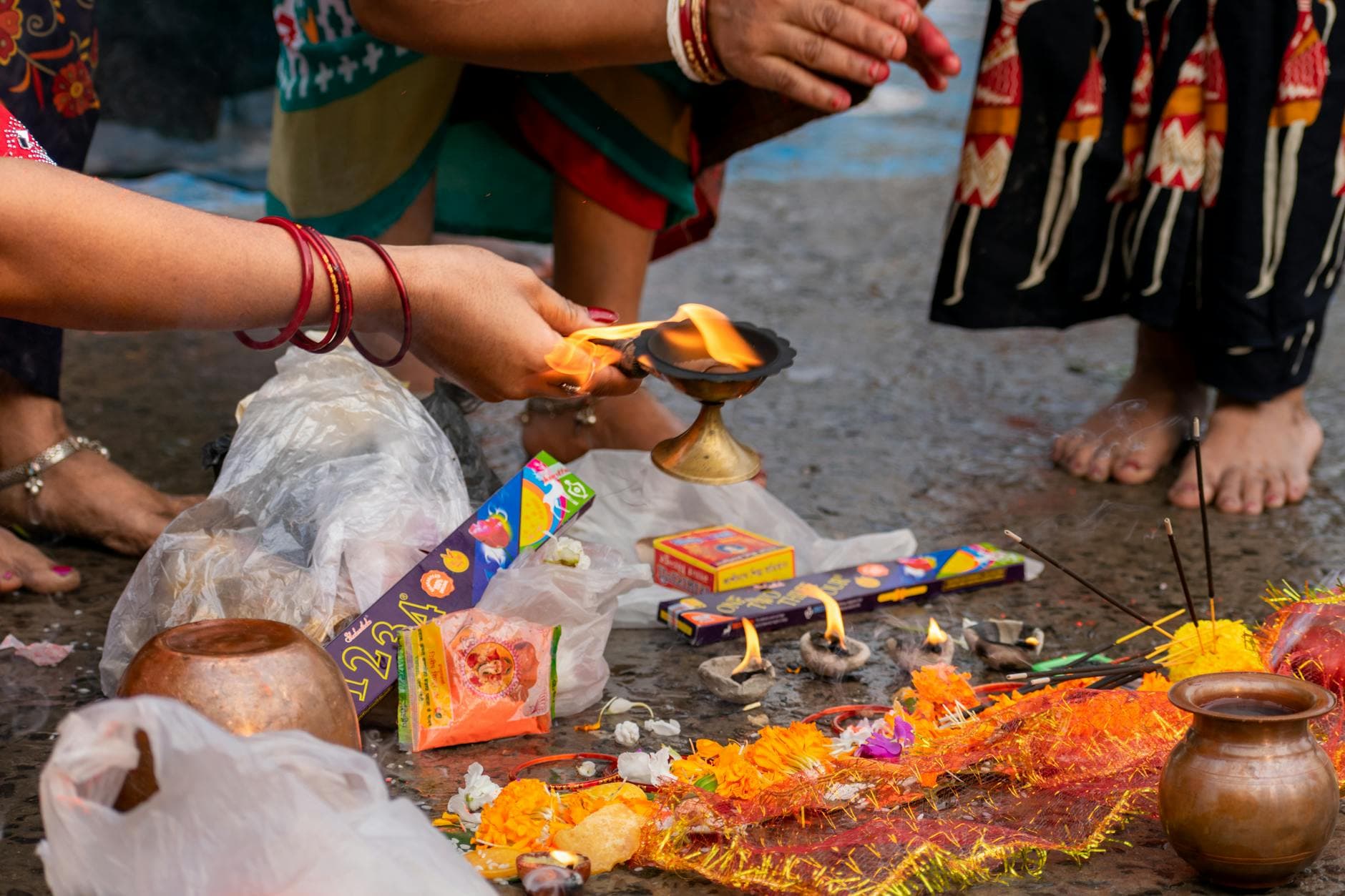
Photo by Krishnendu Biswas
There's a morning when you realize the weight has shifted. Not gone, it's more like it moved from the front of your mind to the back, making room for something else. Curiosity, maybe. Or the quiet pleasure of choosing for yourself what your life looks like now.
Rebuilding after Hinduism is not about replacing what you lost. It's about discovering what you want.
How Are Your Relationships Changing?
What you're experiencing is real, and it's more common than anyone around you is likely to acknowledge. Humans need ritual, creating your own practices for marking time, honoring transitions, and gathering with others is building, not borrowing. Naming this is not the end of the process, but it is the beginning.
The being told you are destroying the family's spiritual merit is one of the most painful dimensions of this transition. Your family isn't trying to hurt you. They're operating from the same framework you were given, one that tells them your soul is at stake. Their fear is real, even when their response is harmful.
Grief without recognition is one of the hardest kinds of grief to carry. There is no sympathy card for losing your faith, no casserole brigade for leaving your mandir. The people around you may not even recognize what you've lost as a real loss. That absence of validation makes the grief louder, not quieter. You don't have to know what comes next.
What Gets to Stay?
Not everything from your faith needs to go. The compassion, the discipline of reflection, the capacity for community, the familiarity with sitting in silence, these may have been cultivated inside a tradition you're leaving, but they belong to you. The work of rebuilding includes a careful inventory: what was given to me, what did I make mine, and what do I want to carry forward?
Inside Hinduism, the entire social architecture is built on shared belief. prasad isn't just a tradition, it's a trust signal, a belonging marker, a way of saying "I'm one of us." When your relationship to that shifts, the architecture doesn't just feel different. It becomes structurally different, because it was designed to function on consensus.
If you just took a deeper breath, that's your body trying to make room for something. Let it. The emotional experience of this transition is not something you can think your way through. It lives in your body as much as your mind, in the tightness when you encounter reminders of your mandir, in the wave of grief that arrives during ashram life, in the anger that surfaces at 2 AM. These responses are not signs of failure. They are your nervous system processing a genuine upheaval. It's okay to not have this figured out.
Building Something That's Actually Yours
What you're navigating right now is genuinely significant, and it deserves to be taken seriously, by you and by the people around you. This isn't a phase, a rebellion, or a crisis to be managed. It's a fundamental shift in how you understand yourself and the world, and that kind of shift takes time, support, and patience.
In Hinduism, doubt is rarely treated as a healthy part of growth. It's framed as a danger, a test, or a failure. That framing makes it nearly impossible to question openly, which forces the questioning underground, where it festers in isolation, disconnected from the support you'd need to navigate it well.
The grief may surprise you with its specificity. It's not just the big things, the theology, the community, the certainty. It's the small things. The sacred thread ceremony you'll never experience the same way again. The inside jokes. The shared rhythms that organized your week. These micro-losses accumulate into something enormous, and they deserve to be mourned individually. You're not behind schedule. There is no schedule.
You Don't Have to Navigate This Alone
If the weight of everything you're carrying right now feels like too much for one person, that feeling is telling you something worth listening to. You were never meant to navigate this alone, even though the nature of this transition often strips away the very support systems you'd normally rely on.
A therapist who understands religious transition can provide support that friends and family, however well-meaning, often cannot. You don't have to be in crisis to reach out. You don't have to have your story figured out.
There is no right timeline for any of this. There is no correct sequence of steps, no checklist to complete, no milestone that marks "done." You are allowed to take this at whatever pace makes sense for your life, and whatever you're feeling right now, the grief, the anger, the relief, the confusion, all of it tangled together, is the appropriate response to something genuinely significant.
Share this article
Your Next Steps
Try This
- Choose one small moment in your day, morning tea, an evening walk, a pause before a meal, and spend one week doing it with intention, noticing how it feels to make it yours.
- Write down one practice from your Hindu upbringing that you actually miss, and one you're relieved to set down. You don't have to do anything with the list yet.
- Tell one person in your life about a new ritual you're trying, not to explain yourself, just to say it out loud.
Keep Reading
A Moment to Reflect
It's okay if a ritual you create feels awkward or incomplete at first, what would it mean to let something be unfinished while you're still figuring out what you want it to be?
You might notice that some old practices carry warmth even without the theology behind them. What would it feel like to keep the feeling without keeping the belief?
It's okay to grieve what the rituals used to mean, even as you build something new. What does your body tell you about which moments in your day are already sacred to you?
Further Reading
Offers peer support and resources for those rebuilding life and relationships outside a religious framework.
Nirmukta: Freethought and Humanism in South Asia, NirmuktaA lived-experience resource specifically addressing secular and humanist perspectives for those deconstructing Hindu and South Asian religious backgrounds.
Stay connected
A monthly letter with new articles, book recommendations, and quiet resources. Just an email address — unsubscribe anytime.