Building a Social Life From Scratch: Friendships After the Ummah
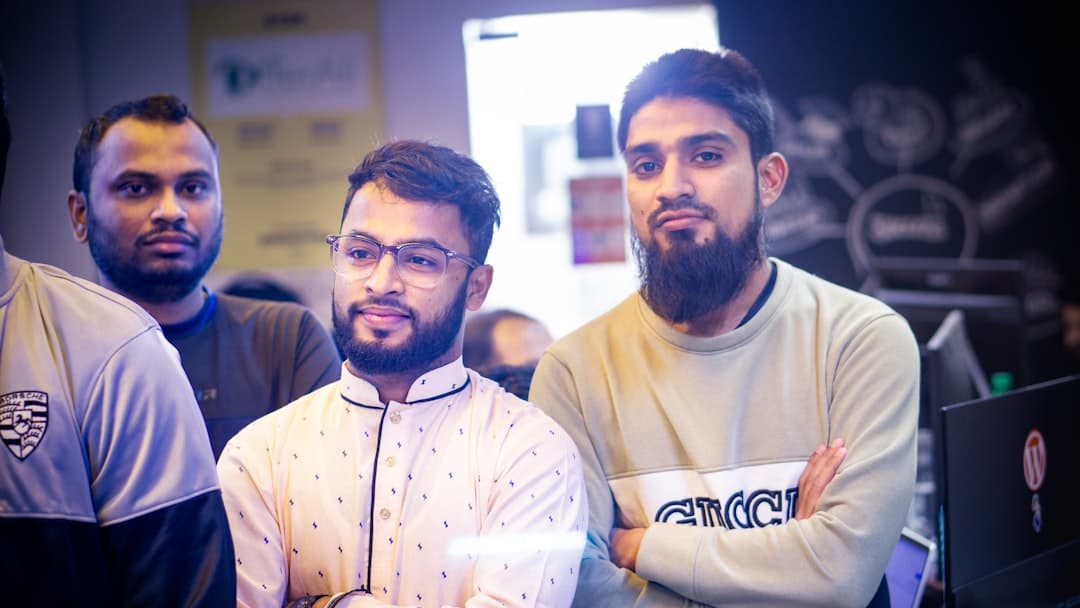
Photo by litoon dev
You are further along than you think. The fact that you're here, thinking about what to build rather than what you left, is evidence of distance traveled. The grief isn't gone, and it doesn't need to be gone for you to start building. The two can coexist: mourning what was and creating what will be.
This is your life now. You get to fill it.
How Are Your Relationships Changing?
What you're experiencing is real, and it's more common than anyone around you is likely to acknowledge. The ummah was not just a religious community but an entire social infrastructure, rebuilding friendship from scratch as an adult requires skills you were never taught. Naming this is not the end of the process, but it is the beginning.
Inside Islam, the entire social architecture is built on shared belief. daily salat isn't just a tradition, it's a trust signal, a belonging marker, a way of saying "I'm one of us." When your relationship to that shifts, the architecture doesn't just feel different. It becomes structurally different, because it was designed to function on consensus.
Anger is often the emotion people feel most guilty about, because most religious traditions teach that anger is sinful or dangerous. But anger at genuine harm is not only appropriate, it's a sign that your sense of self-worth is intact. You're angry because you were treated in ways that weren't okay. That clarity is a foundation you can build on.
The freedom of rebuilding is real, and so is the loneliness. You're making choices that nobody in your former community modeled for you. There's no template for a post-Islamic life, no mentor who walked this exact path before you. That means you're building in the dark sometimes. But it also means what you build will be genuinely, authentically yours. You don't have to be sure about anything to deserve support.
Which Friendships Can Survive This?
Some friendships will survive this and some won't, and you cannot predict which from where you stand now. The friend you expected to understand may disappear. The one you wrote off may show up with quiet, steady presence. Pay attention to who asks you questions rather than giving you answers.
The being treated as if you have been corrupted by the West is one of the most painful dimensions of this transition. Your family isn't trying to hurt you. They're operating from the same framework you were given, one that tells them your soul is at stake. Their fear is real, even when their response is harmful.
You might feel that in your body before you can name it with words. That's okay. The body often knows first. The emotional experience of this transition is not something you can think your way through. It lives in your body as much as your mind, in the tightness when you encounter reminders of your mosque, in the wave of grief that arrives during Quranic memorization, in the anger that surfaces at 2 AM. These responses are not signs of failure. They are your nervous system processing a genuine upheaval.
Rebuilding often involves a period of overcorrection, swinging hard away from everything associated with your former faith before finding a more nuanced middle ground. If you find yourself rejecting things you actually still value just because they're associated with Islam, that's worth noticing. You get to keep what serves you. Leaving the tradition doesn't require leaving every single thing it touched. You don't have to be sure about anything to deserve support.
What Gets to Stay?
Not everything from your faith needs to go. The compassion, the discipline of reflection, the capacity for community, the familiarity with sitting in silence, these may have been cultivated inside a tradition you're leaving, but they belong to you. The work of rebuilding includes a careful inventory: what was given to me, what did I make mine, and what do I want to carry forward?
In Islam, doubt is rarely treated as a healthy part of growth. It's framed as a danger, a test, or a failure. That framing makes it nearly impossible to question openly, which forces the questioning underground, where it festers in isolation, disconnected from the support you'd need to navigate it well.
Grief without recognition is one of the hardest kinds of grief to carry. There is no sympathy card for losing your faith, no casserole brigade for leaving your mosque. The people around you may not even recognize what you've lost as a real loss. That absence of validation makes the grief louder, not quieter.
What you build from here doesn't have to be a replacement for what you left. It doesn't have to be a new belief system, a new community that mirrors the old, or a new set of answers. It can be something messier and more honest, values tested against experience, relationships built on authenticity, and a life that makes sense to you even if it wouldn't make sense to who you were five years ago. It's okay to not have this figured out.
Building Something That's Actually Yours
What you're navigating right now is genuinely significant, and it deserves to be taken seriously, by you and by the people around you. This isn't a phase, a rebellion, or a crisis to be managed. It's a fundamental shift in how you understand yourself and the world, and that kind of shift takes time, support, and patience.
The family honor dynamics you may be experiencing isn't a personal failure. It's the predictable consequence of a system that tied your sense of cultural belonging directly to your participation in Islam. When that participation changes, the loss is real and proportionate to what was at stake.
The nighttime hours are often the worst. During the day, distraction helps. But at 2 AM, when the fear of jahannam that lives in your chest at 2 AM shows up, there's nowhere to hide. If this is happening to you, know that it's incredibly common, it's not a sign that your doubt is wrong, and it does get less frequent over time.
Rebuilding often involves a period of overcorrection, swinging hard away from everything associated with your former faith before finding a more nuanced middle ground. If you find yourself rejecting things you actually still value just because they're associated with Islam, that's worth noticing. You get to keep what serves you. Leaving the tradition doesn't require leaving every single thing it touched. You're not behind schedule. There is no schedule.
You Don't Have to Navigate This Alone
If the weight of everything you're carrying right now feels like too much for one person, that feeling is telling you something worth listening to. You were never meant to navigate this alone, even though the nature of this transition often strips away the very support systems you'd normally rely on.
A therapist who understands religious transition can provide support that friends and family, however well-meaning, often cannot. You don't have to be in crisis to reach out. You don't have to have your story figured out.
There is no right timeline for any of this. There is no correct sequence of steps, no checklist to complete, no milestone that marks "done." You are allowed to take this at whatever pace makes sense for your life, and whatever you're feeling right now, the grief, the anger, the relief, the confusion, all of it tangled together, is the appropriate response to something genuinely significant.
Share this article
Your Next Steps
Try This
- Identify one activity or interest you had before, or outside of, the ummah, and find one local or online group connected to it this week.
- Reach out to one person you've felt a genuine connection with recently, even if it's just a message saying you'd like to get together.
- Write down three things you want in a friendship that had no place in your old community, qualities you're now free to look for.
Keep Reading
A Moment to Reflect
It's okay if the idea of making new friends feels exhausting right now, you're not behind, and there's no timeline you're supposed to be keeping.
You might notice that some of the qualities you're looking for in friendship are things you were never fully allowed to receive before. What would it feel like to let yourself want those things openly?
What would a friendship feel like where you didn't have to manage what you revealed about yourself, where you could simply show up as you are now?
Further Reading
Stay connected
A monthly letter with new articles, book recommendations, and quiet resources. Just an email address — unsubscribe anytime.