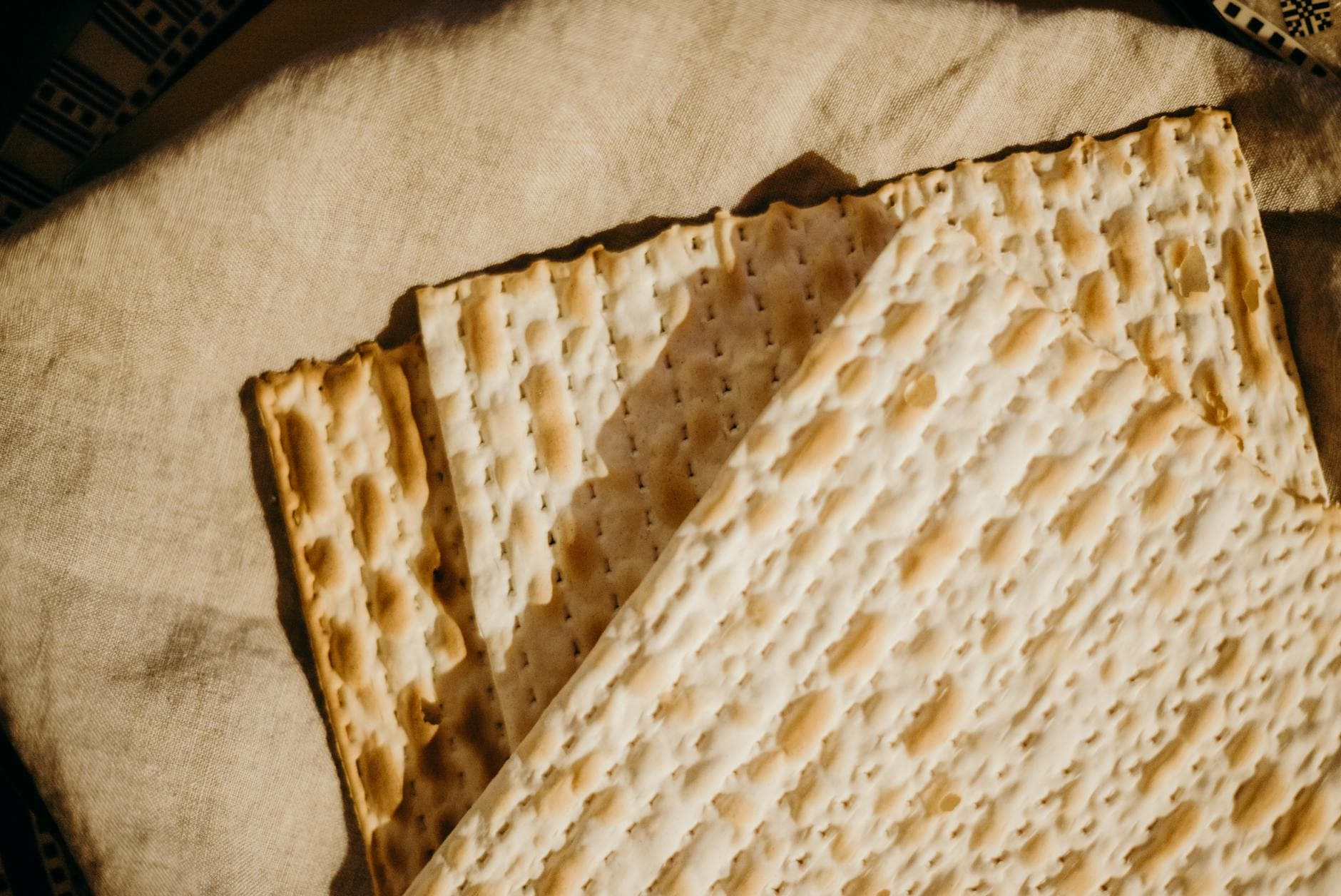
Secular Seder, Non-Observant Shabbat: Reclaiming Jewish Holidays on Your Own Terms
Photo by cottonbro studio
The dust is settling. Not completely, maybe it never does completely, but enough that you can see the outline of something new taking shape. You've survived the hardest stretch, and the question has shifted from "what am I leaving?" to "what am I building?"
What you build from here is yours to design.
Who Are You Becoming?
What you're experiencing is real, and it's more common than anyone around you is likely to acknowledge. The holidays do not have to be all-or-nothing; you can keep the Seder and skip the second days, light candles without believing in the blessing. Naming this is not the end of the process, but it is the beginning.
Many people who've navigated this transition from Orthodox Judaism describe the same paradox: the bar mitzvah that once felt like home now feels like a performance, but the absence of it feels like nothing at all. That gap between performance and absence is where much of the disorientation lives.
Many people who've been through this describe a period of emotional whiplash, relief and grief, freedom and fear, anger and tenderness, all arriving without warning. If that's your experience, you're not unstable. You're in the middle of something enormous, and your emotional system is doing exactly what it should: responding to the full reality of what's happening.
The freedom of rebuilding is real, and so is the loneliness. You're making choices that nobody in your former community modeled for you. There's no template for a post-Jewish life, no mentor who walked this exact path before you. That means you're building in the dark sometimes. But it also means what you build will be genuinely, authentically yours. It's okay to rest in the middle of this. Not everything requires forward motion.
How Do You Navigate the Holidays?
Holidays are landmines because they compress every complicated feeling about your transition into a single, socially mandated gathering. The the eruv you used to participate in without thinking now requires a decision, attend and perform, attend and be honest, or don't attend and deal with the fallout. None of these options is easy, and all of them are valid.
What outsiders rarely understand about leaving Orthodox Judaism is the scope of what changes. It's not just beliefs. It's vocabulary, social calendar, moral intuitions, daily habits, relationship dynamics, and often your sense of safety. The word "leaving" doesn't capture the enormity of what's actually happening.
The nighttime hours are often the worst. During the day, distraction helps. But at 2 AM, when the weight of obligation to a people who survived the Holocaust shows up, there's nowhere to hide. If this is happening to you, know that it's incredibly common, it's not a sign that your doubt is wrong, and it does get less frequent over time.
Rebuilding often involves a period of overcorrection, swinging hard away from everything associated with your former faith before finding a more nuanced middle ground. If you find yourself rejecting things you actually still value just because they're associated with Orthodox Judaism, that's worth noticing. You get to keep what serves you. Leaving the tradition doesn't require leaving every single thing it touched. There is no right timeline for any of this.
What Gets to Stay?
Not everything from your faith needs to go. The compassion, the discipline of reflection, the capacity for community, the familiarity with sitting in silence, these may have been cultivated inside a tradition you're leaving, but they belong to you. The work of rebuilding includes a careful inventory: what was given to me, what did I make mine, and what do I want to carry forward?
The communal obligation you may be experiencing isn't a personal failure. It's the predictable consequence of a system that tied your sense of family closeness directly to your participation in Orthodox Judaism. When that participation changes, the loss is real and proportionate to what was at stake.
Grief without recognition is one of the hardest kinds of grief to carry. There is no sympathy card for losing your faith, no casserole brigade for leaving your shul. The people around you may not even recognize what you've lost as a real loss. That absence of validation makes the grief louder, not quieter.
What you build from here doesn't have to be a replacement for what you left. It doesn't have to be a new belief system, a new community that mirrors the old, or a new set of answers. It can be something messier and more honest, values tested against experience, relationships built on authenticity, and a life that makes sense to you even if it wouldn't make sense to who you were five years ago. There is no right timeline for any of this.
Building Something That's Actually Yours
What you're navigating right now is genuinely significant, and it deserves to be taken seriously, by you and by the people around you. This isn't a phase, a rebellion, or a crisis to be managed. It's a fundamental shift in how you understand yourself and the world, and that kind of shift takes time, support, and patience.
Many people who've navigated this transition from Orthodox Judaism describe the same paradox: the yeshiva education that once felt like home now feels like a performance, but the absence of it feels like nothing at all. That gap between performance and absence is where much of the disorientation lives.
The grief may surprise you with its specificity. It's not just the big things, the theology, the community, the certainty. It's the small things. The Shabbat dinner you'll never experience the same way again. The inside jokes. The shared rhythms that organized your week. These micro-losses accumulate into something enormous, and they deserve to be mourned individually.
What you build from here doesn't have to be a replacement for what you left. It doesn't have to be a new belief system, a new community that mirrors the old, or a new set of answers. It can be something messier and more honest, values tested against experience, relationships built on authenticity, and a life that makes sense to you even if it wouldn't make sense to who you were five years ago. You don't have to be sure about anything to deserve support.
You Don't Have to Navigate This Alone
If the weight of everything you're carrying right now feels like too much for one person, that feeling is telling you something worth listening to. You were never meant to navigate this alone, even though the nature of this transition often strips away the very support systems you'd normally rely on.
A therapist who understands religious transition can provide support that friends and family, however well-meaning, often cannot. You don't have to be in crisis to reach out. You don't have to have your story figured out.
There is no right timeline for any of this. There is no correct sequence of steps, no checklist to complete, no milestone that marks "done." You are allowed to take this at whatever pace makes sense for your life, and whatever you're feeling right now, the grief, the anger, the relief, the confusion, all of it tangled together, is the appropriate response to something genuinely significant.
Share this article
Your Next Steps
Try This
- Choose one holiday or Shabbat element you actually want to keep, not because you're supposed to, but because it genuinely means something to you, and write down why it matters.
- Look up one secular or cultural Jewish organization or community (Secular Humanistic Judaism, Jewish cultural groups, Haggadah projects) and spend 15 minutes exploring what they offer.
- Draft a one-sentence answer to 'what does being Jewish mean to me now?', it doesn't have to be final, and it doesn't have to satisfy anyone else.
Keep Reading
Explore Resources
A Moment to Reflect
It's okay if some holidays feel meaningful even now, you're allowed to hold onto what resonates without having to justify it to anyone, including yourself.
You might notice that certain rituals carry memory or warmth completely separate from belief. What would it feel like to honor that warmth on your own terms?
What would it feel like to be the one who gets to decide what Jewish means in your home, not as a rejection of the past, but as an act of building something genuinely yours?
Further Reading
Stay connected
A monthly letter with new articles, book recommendations, and quiet resources. Just an email address — unsubscribe anytime.